
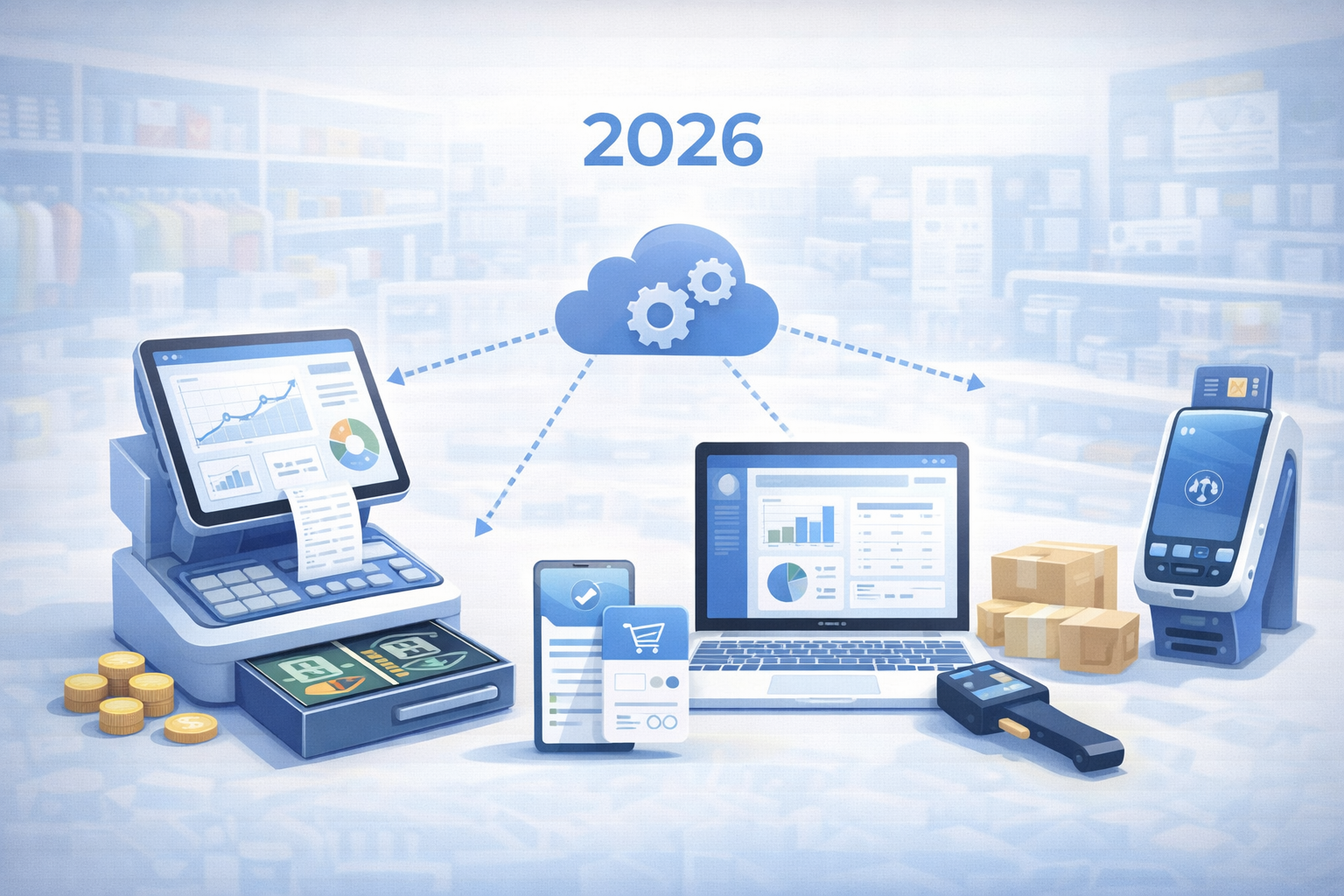
A better retail tech stack in 2026 is not about adding more tools. For many businesses, the goal should be fewer disconnected systems and more operational clarity.
Retailers need sales, inventory, purchasing, accounting, reporting, and customer activity to work together. When those pieces are split across too many platforms, the business spends more time reconciling than managing.
What a retail tech stack needs to support
A practical retail stack should support:
- Fast point of sale workflows
- Accurate inventory movement
- Purchasing and receiving
- Customer and vendor records
- Accounting handoff
- Management reporting
- Clear exception review
Common stack problems
Too many single-purpose tools
Each tool may solve one problem, but the handoffs between tools become the real cost.
Weak reporting
If reports have to be assembled from exports, managers may not see issues until after cleanup.
Inventory outside the main workflow
Inventory is too important to live in a side spreadsheet. It affects sales, purchasing, margins, and cash.
Fragile integrations
Integrations can help, but when the business depends on several of them, support and troubleshooting become harder.
What to prioritize in 2026
Focus on systems that reduce duplicate entry, keep inventory and accounting closer to sales activity, and make reporting easier to trust.
A good tech stack should make the business easier to operate, not just add more dashboards.
How Brisk helps
Brisk connects retail POS, inventory, accounting, reporting, and operations in one system. That can reduce spreadsheet dependency, simplify workflows, and give managers a clearer view of the business.
Related reading: How to Scale from One Store to Multiple Locations and Top KPIs Every Retail Owner Should Track.
Final thoughts
A stronger retail tech stack starts with connected workflows. The best setup is not always the one with the most apps. It is the one that helps the business run with fewer handoffs and better visibility.
Want a cleaner retail tech stack? Contact Brisk.